---
Painter and Sculptor - artist of 20th-century Italy
Painter and Sculptor - Italian 20th century artist
Artistic analysis
To place Gattavecchia in a single artistic period is reductive, because in his long creative activity, he came into contact with various movements that influenced him.
He was born in 1907 and passed away in 1994, therefore he produced works for fifty years, coming into contact with the various artistic movements of the 20th century.
The first works from the 1940s appear marked by the pain and terror of war.
He was in the prime of his youth and those tragic events broke something inside him that would never be repaired.
In that period he drew pointed hands, faces like skeletons, and nudes without arms (“Objects” 1948, “Thoughts” 1947, “Thoughts II” 1948).
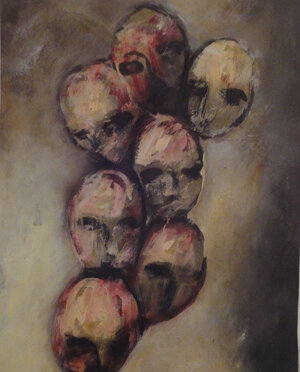
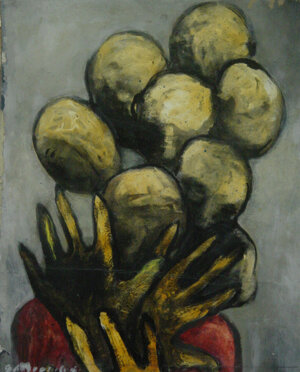
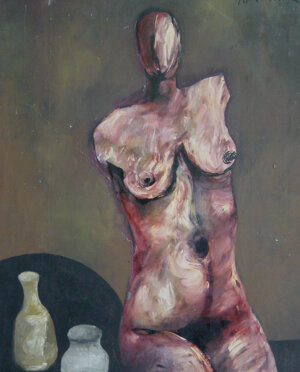
Then follow paintings of serene domestic settings (“Vele” 1948, “Vaso azzurro” 1948, “Angolo verde” 1950), but there are also returns to red tones and female figuresmarked by suffering (“Leda” 1950).
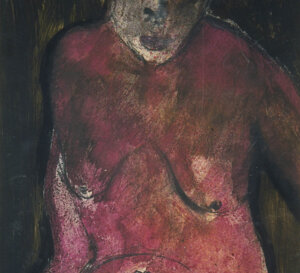
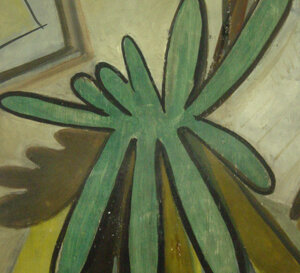
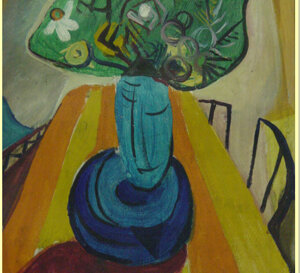
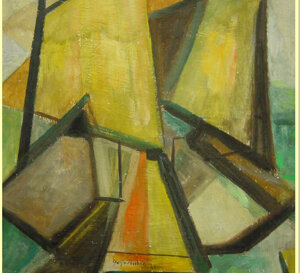
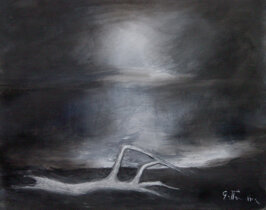
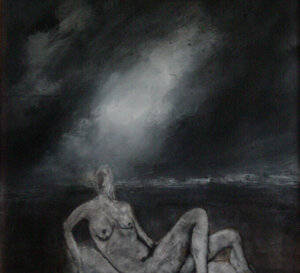
Even the landscapes of his beloved Cesena are tormented by gray and dark skies with unsettling white gashes (“Over the city” 1953).
The 1960s, the years of the boom, will greatly influence Gattavecchia's art.
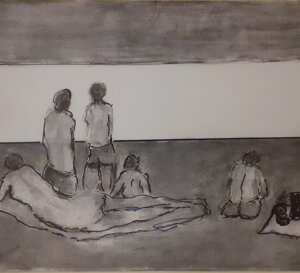
He will become increasingly intrigued by new things, by enthusiasm for life and the desire to leave everything behind (“The Bouquet” 1960, “Still Life” 1962, “On the Beach” 1965) even though from time to time the ghosts of the past will return with dark and undefined figures (“Intrusions” 1962)
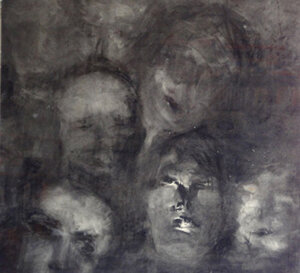
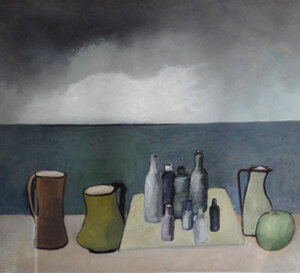
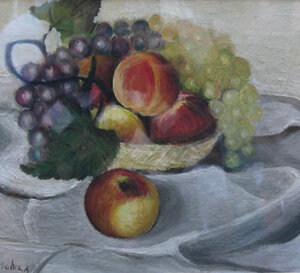
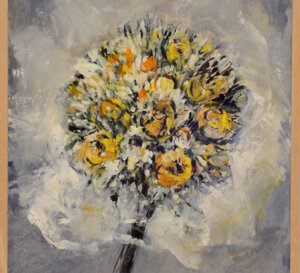
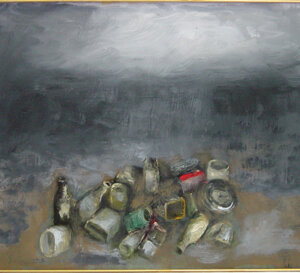
The production of the 1970s is influenced by the overwhelming social changes taking place, and themes that are still relevant today appear, such as consumerism, in which houses “vomit” superfluous objects (“Modern Times I” - 1971), and that of waste (“Modern Times II” - 1971), where garbage accumulates outdoors in arid spaces.
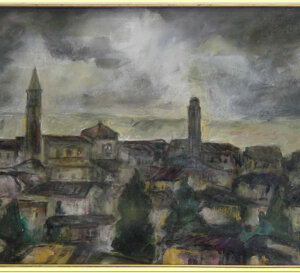
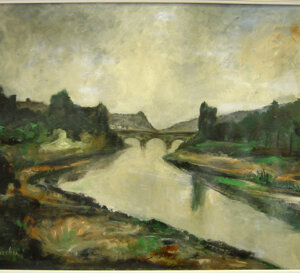
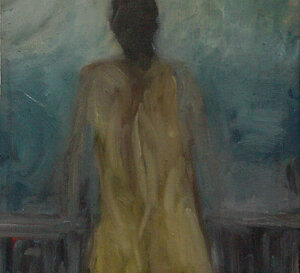
The landscapes appear more serene, but are still depicted in conditions of a yellow light muffled by a kind of melancholy (“Il Savio” 1975, "Roofs of Cesena" 1975).
The influences on artistic activity also involve materials. In those years, the artist would temporarily abandon canvas to paint on plastic.
He would also be influenced by the consequences of the ferment that the art world was experiencing, thanks to the speed with which ideas, information, and culture were being exchanged.
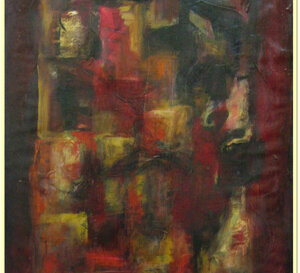
He would create the abstract paintings “Fragments” - 1979.
These are 6 painted works, cut out and then glued back together, through a process of symbolic reconstruction research.
The whole is actually made up of different parts, like the intimate essence, the most authentic part of the person.
Another dominant theme in Gattavecchia's art is that of incommunicability.
Society has changed profoundly.
From a social life centered on public spaces (squares, markets, streets), when “everyone knew each other” and people helped one another, we have moved to a life lived inside locked houses, where everyone thinks only of themselves.
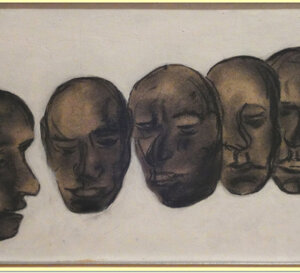
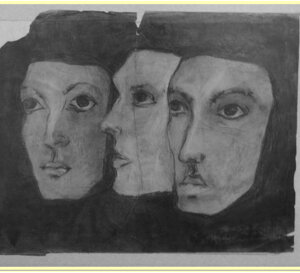
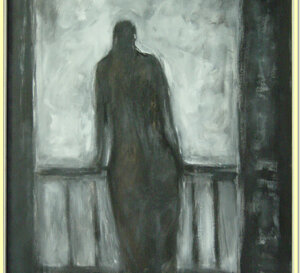
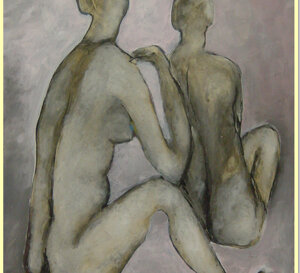
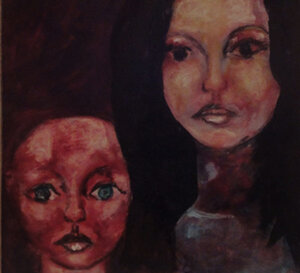
And so paintings are born such as “Indifference” 1979, “Enigma” 1979, "On the Beach" 1980, "La Bruna" 1980, in which the faces do not communicate, the mouths do not speak, the eyes do not look. Each character is closed in on themselves and avoids any communicative approach.
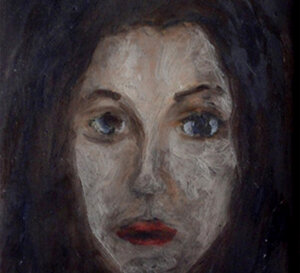
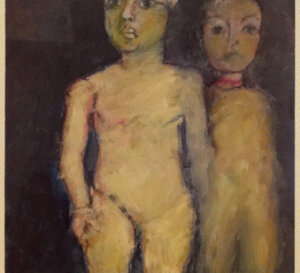
But the event that shocked the artist, after the Second World War, was the Chernobyl nuclear accident. He would paint “Chernobyl” 1986 and “Radioactive Effect” 1986, in which women and children without hair and without expression are portrayed.
They seem fixed in time, frozen in word and gesture. The yellow or red color makes them unpleasant to look at. There is no joy of youth nor enthusiasm for life.
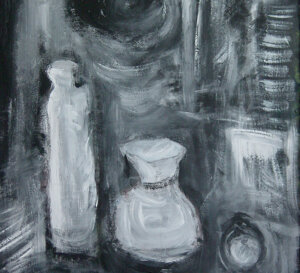
These will be among the last color paintings; afterwards, he would use almost exclusively black and white, as if life were too painful to represent in color.
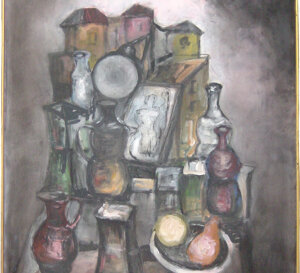
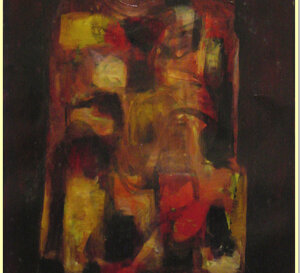
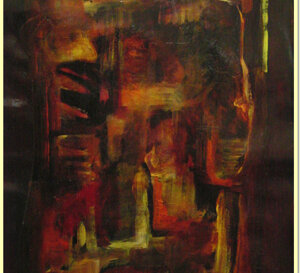
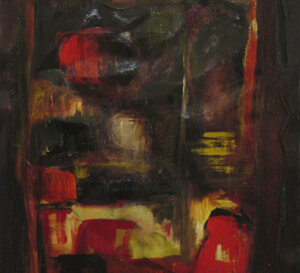
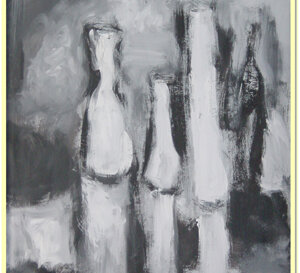
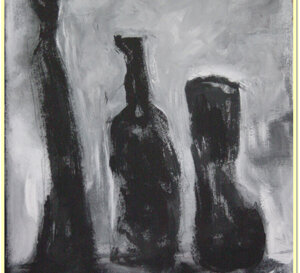
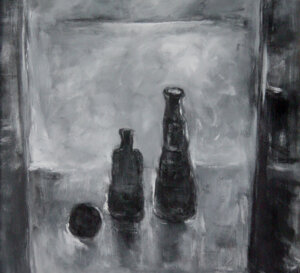
In the paintings of the 90s, shapes and people blend and merge. Are the objects depicted people or bottles? Can you know what is inside a dark bottle? Can you know what a person hides in their innermost being?
The artist questions that intimate and private part that no one can know except through direct and sincere communication.
Thus were born the paintings "Black Objects" 1990, "Black Vases" 1990, "Interior" 1990, "White Vases" 1990.
Aristide Gattavecchia dealt with powerful themes such as violence (of war), incommunicability, and solitude.
And also the themes of a society that is changing rapidly and does not know how to face and organize changes appropriately: ecology, saving, consumerism.
And finally, content that is more relevant than ever, such as homosexuality and discrimination.
He investigated the human soul, pushing himself to a rawer and more intimate observation.
His research led him to very precise choices on the palette, representing the psychosis of fear with bright red tones and the contours of bodies or objects with bold black brushstrokes.
Being also a sculptor, his paintings are often transformed into sculptures and are influenced by the representative power of sculpture, which has no color but all the chromatic variations from white to black.
Aristide Gattavecchia made existentialism his most peculiar reason for being.
An investigation of man, which goes beyond phenomenological aspects to delve into a deeper knowledge of the subject.
A knowledge aimed at his most hidden world, at the very reasons for his existence. For this reason, his works float in a surreal dimension that is nothing but pure subconscious.
The subjects of Gattavecchia live in a decontextualized space, they are trembling bodies emptied of any physiognomic characteristic, of any plastic value.
What Gattavecchia describes seems to be a situation of existential solitude, an impossibility of communication and sharing, a state of being for which the artist has found an extraordinarily empathetic and eloquent formal expression.
He was placed by Prof. Sgarbi as an “expressionist in the style of Munch,” especially in works such as: “La Bruna,” “Pensieri,” “Leda.” These are works in which the artist expresses the strong tensions of the soul, both through the choice of subjects and with the incisive use of line and color.
But the influence of surrealism should not be forgotten in works such as “Frammentazione,” “Intrusioni,” “Composizione,” “Prospettive,” “Contatti,” where strange images that appear from the background recall the world of dreams and the unconscious.
Abstractionism is also present in Gattavecchia's works, especially in the series “Frammenti” and “Trasfigurazioni,” works in which forms and colors express emotions and ideas and not figurative compositions.
It can therefore be said that the artist was able to traverse the various currents of the 20th century, making the new messages of creative communication his own, while maintaining a unique, recognizable, and very distinctive style.